
4. Uneducated Guesses About the Burial Mounds
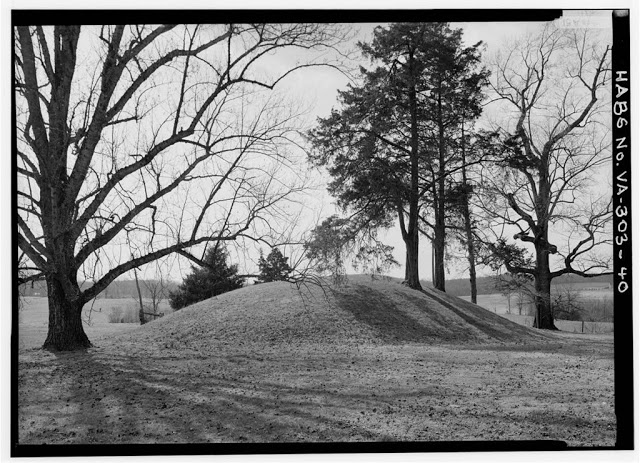 |
| SOURCE |
There was much supposition regarding these mounds during the time
leading up to Jefferson's late 1700s excavation. The mainstream hypotheses
assumed that these mounds marked the locations of ancient town sites built by
Vikings, Phoenicians, Isrealites, or some other more civilized group of Old
World peoples since they were most typically located in Jefferson's modern time “in the softest and most
fertile meadow-grounds on river sides.”[1] The theory of the
development of the mounds in these ancients towns included the tradition of
“the first person who died was placed erect, and earth put about him, so as to
cover and support him…”[2] then, when another
individual died, they stacked that corpse on top of the previous and built up
the dirt around it, continuing onward until the mounds became the large
structures that they were.[3] Many believed that these
mounds were the final resting places of warriors who died in battle, earning
them a place of honor among their community.
Jefferson’s
excavation and findings would prove each of these mainstream assumptions wrong.